
Agentic AQUA Brings Bitcoin Wallets for AI Agents
JAN3’s A1 Lab launched Agentic AQUA, enabling AI agents to send, receive, and manage Bitcoin across networks.

JAN3’s A1 Lab launched Agentic AQUA, enabling AI agents to send, receive, and manage Bitcoin across networks.
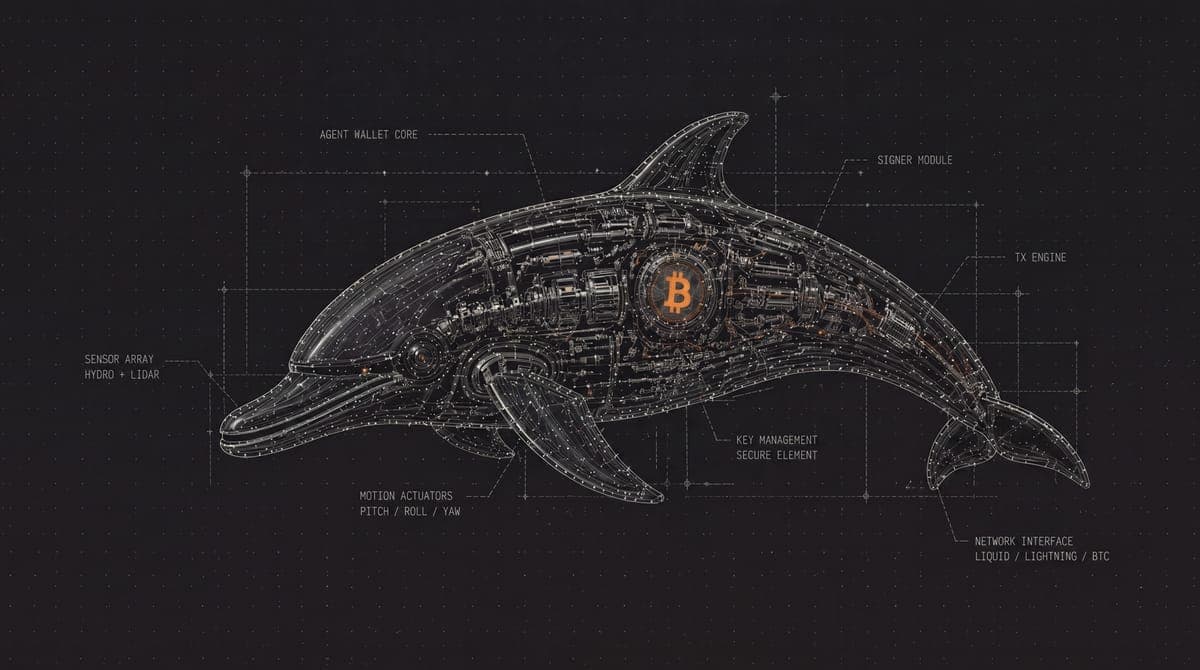
A1 Lab, a division of JAN3, has introduced Agentic AQUA, an open-source tool designed to enable autonomous AI systems to transact using Bitcoin.
Your agent can now use #Bitcoin! 🟠#AgenticAQUA is an open-source tool that lets your AI agent generate addresses, check balances, transact with Bitcoin and @Liquid_BTC, and pay Lightning invoices, all through natural language.
— A1 Lab (@A1Laboratory) May 4, 2026
Learn more here! 👇https://t.co/DSgW6qXkEr
The software extends the functionality of the AQUA Wallet to AI agents, allowing them to send, receive, and manage digital assets across Bitcoin-related networks.
The release comes as artificial intelligence systems increasingly incorporate autonomous or “agentic” capabilities.
While AI tools are widely used for tasks such as coding, research, and design, their ability to conduct financial transactions has been limited by existing payment infrastructure.
Many online payment systems rely on identity verification and behavioral checks designed to confirm human participation, which can restrict automated systems.
According to the developers, Agentic AQUA is built to operate using Bitcoin’s transaction model, where any entity with a private key can authorize payments without requiring identity verification or intermediary approval.
The tool enables AI agents to interact with Bitcoin’s base layer, as well as the Liquid Network and the Lightning Network.
Agentic AQUA connects to AI systems through a Model Context Protocol (MCP) server, allowing users to execute wallet functions via natural language commands.
These functions include generating addresses, checking balances, sending transactions on-chain or over Liquid, and creating or paying Lightning invoices.
The wallet can also be accessed through a command-line interface (CLI), which allows users to execute commands directly.
The wallet uses a local-first security model, where seed phrases are stored on the user’s device and encrypted.
Private keys are derived at the time of transaction signing and are not persistently stored.
The developers note that enabling password protection is important, as unencrypted seed files may be accessible to anyone with access to the device.
Agentic AQUA is described as experimental software and operates as a hot wallet, meaning private keys are stored on an internet-connected device.
The developers state that it is intended for small operational balances rather than long-term storage.
They also note that autonomous agents may execute transactions without direct user oversight, which could introduce additional risk.
The tool supports use cases such as recurring payments, invoice generation, and automated purchasing.
Through integration with Bitrefill, agents can access digital products including gift cards, mobile top-ups, and eSIMs.
In addition to Bitcoin, the wallet supports assets on the Liquid Network, including Tether USDt and L-BTC.
The developers state that future updates may include swap functionality between Bitcoin and Liquid assets.
Further integrations and expanded feature parity with the AQUA mobile wallet may be introduced depending on user demand, according to the development team.
The release highlights ongoing efforts to integrate AI systems with digital asset infrastructure, particularly in areas where automated software may be used to initiate and manage financial transactions.